


Lower Blepharoplasty: Looking Beyond Under-Eye Skin and Fat to the Supporting Structures
Atelier Plastic Surgery Clinic
Skin sagging, fat bulging and the strength supporting the eyelid are evaluated separately.
Lower blepharoplasty is a surgery that addresses loose under-eye skin and bulging fat and, when needed, reinforces the supporting structures. Atelier Plastic Surgery examines skin elasticity, the degree of fat bulging, the strength supporting the lower eyelid, and its connection with the cheek. We distinguish its scope from under-eye fat repositioning for cases with little skin sagging, and we prioritize a plan that preserves eyelid position.
Lower blepharoplasty consultation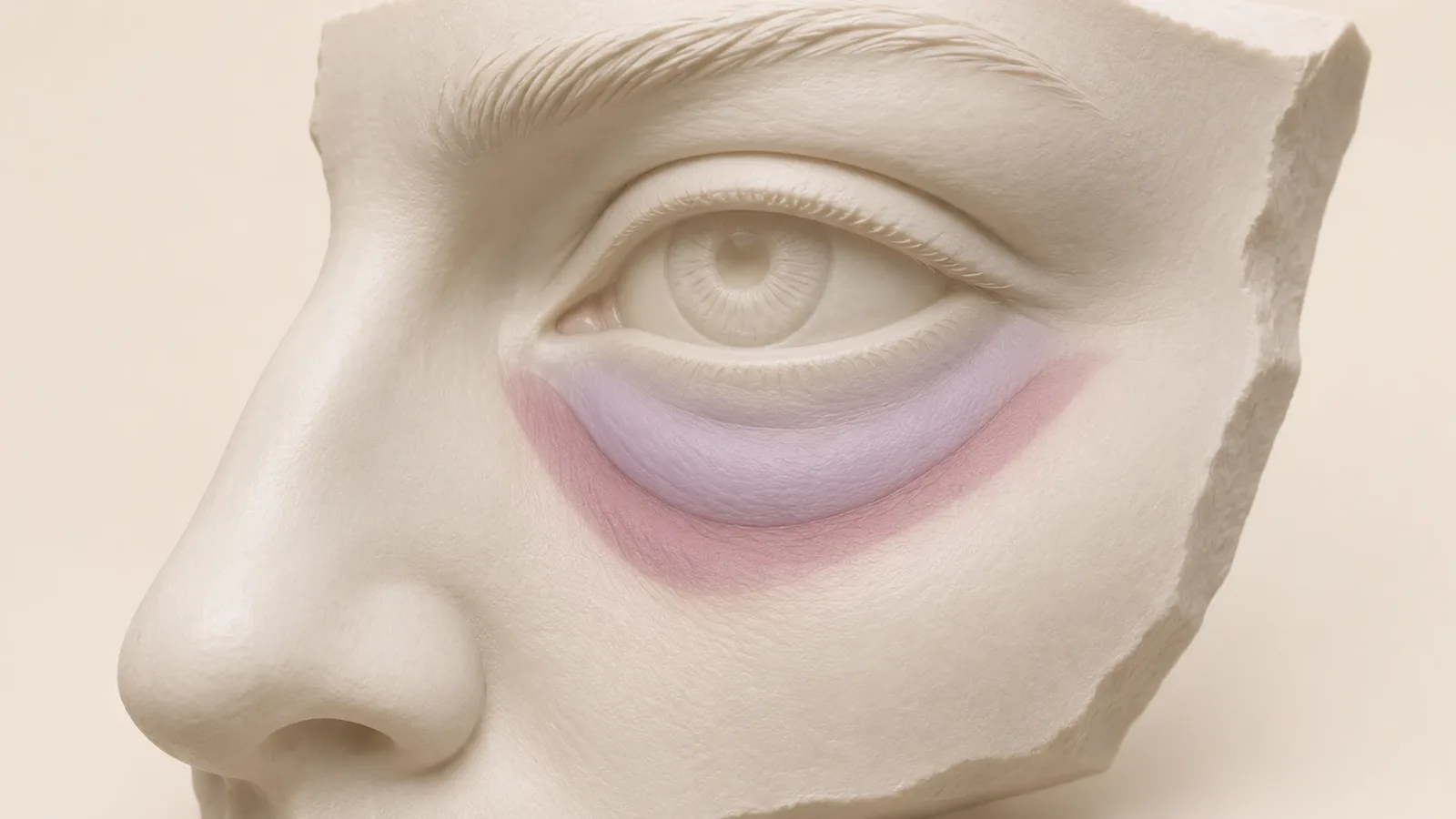
Under-eye bulging and wrinkles result from overlapping factors
We examine separately the area where fat appears to bulge forward, the hollow groove beneath it, and the wrinkles caused by loose skin. When these factors appear together, they can create a tired-looking impression, but which surgery is needed is not decided by the outward appearance alone.
If skin elasticity remains and fat bulging is the main concern, an approach that moves fat from the conjunctival side may be considered. If skin sagging and wrinkles are pronounced, we discuss lower blepharoplasty, which addresses the skin as well. For skin left over after a previous surgery or bulging that has reappeared, the history must also be reviewed.
Please tell us separately about expression lines when you smile and sagging when your face is at rest. Rather than removing a lot of skin to eliminate every wrinkle, it is important to set a range that maintains the position and function of the lower eyelid.
We distinguish the purposes of skin incision, fat repositioning and support reinforcement
| Planning element | Issue examined | Consultation focus |
|---|---|---|
| Lower blepharoplasty with skin incision | Loose skin and fine wrinkles | Required skin range, incision line and eyelid position |
| Combined with fat repositioning | Bulging fat and the hollow groove below it | Extent of removal and repositioning, possibility of under-eye hollowing |
| Eyelid support reinforcement | Weak strength supporting the lower eyelid | Need for reinforcement such as lateral canthal fixation |
| When there is little skin sagging | Mainly fat bulging | Suitability of conjunctival-approach fat repositioning |
The skin incision is planned just below the lower lashes, and loose skin is addressed only as much as needed. Moving bulging fat into the hollow groove is prioritized, and removal is considered only within the necessary range. Each element is not applied identically to everyone.
Lower blepharoplasty consultation informationis where you can view eyelid support reinforcement and fat repositioning separately. If several approaches were proposed together, ask to have the reason each is needed and the added burden explained.
Eyelid position and the connection with the cheek can change the plan
We check the force with which the lower eyelid returns after being pulled and released, and examine the support provided by ligaments and muscles. If support is weak, tidying only the skin and fat may not be enough, so whether to reinforce is planned together.
Excessive skin removal can pull the eyelid downward, exposing the white of the eye or turning the eyelid outward. Atelier checks the skin to be left in place while you are seated, and considers the goal of reducing wrinkles together with eyelid position. Even when a reinforcement is planned, the possibility of complications must be explained to you separately.
If the height difference between the under-eye area and the cheekbone is large, shadows may remain even after only the under-eye is tidied. Shadows caused by fat bulges and hollows are distinguished from dark circles caused by pigment or visible blood vessels. Please check what surgery can address and what may remain.
Stitch removal, return to daily life and shape stabilization follow different timelines

The general surgery information is: surgery of about 1 hour to 1 hour 30 minutes, combined local and sleep anesthesia, and same-day discharge. Stitch removal is introduced as about 5–7 days and return to daily life as about 1–2 weeks, but this may vary depending on your individual condition and any surgery done together.
Removing the stitches does not mean that all swelling and scar changes are over. Slight swelling, a firm feeling, and changes in fat position and the incision line are checked at follow-up visits. Please discuss important photo shoots, work and exercise schedules separately.
On the day of surgery, cold compresses, resting with your head elevated, and the use of prescribed medication and eye drops follow individual instructions. Avoid rubbing your eyes or squeezing them shut, and confirm when you can resume washing your face, wearing makeup, using contact lenses and returning to activities. The plans for stitch removal and the 1-month and 3-month visits after surgery are also explained according to your actual recovery.
Decide after knowing the possible risks and the symptoms to check immediately
Bleeding and hematoma, infection, swelling and bruising, left-right asymmetry and incision-line scars may occur. Removing too much fat can cause hollowing, and after repositioning, lumpiness or re-bulging may appear. We discuss these limitations along with the improvement you expect.
You should also be told about ectropion, eyelid retraction, dryness or a foreign-body sensation from incomplete eye closure, tearing and conjunctival swelling. Depending on your condition, additional correction may be needed, and you should not expect every problem to resolve on its own with time.
If you have sudden pain or vision changes after surgery, you must contact the clinic immediately to be evaluated. Do not wait until your scheduled visit date or decide on your own that it is ordinary swelling. Check in advance how to contact us and the guidance for urgent situations.
Please tell us about any previous eye surgery and eye care visits, the medications you take and your health condition. Costs are discussed after your individual range and method have been decided, and please also check what is included for follow-up care and additional evaluation.
Frequently Asked Questions
How does lower blepharoplasty differ from under-eye fat repositioning?
Lower blepharoplasty includes addressing loose skin. If there is little skin sagging and fat bulging is the main concern, conjunctival-approach fat repositioning may be suitable, so the skin and the supporting strength are checked together.
Is it better to remove as much under-eye fat as possible?
Excessive removal can cause hollowing. A plan to move the bulging fat into the hollow groove is considered first, and removal is considered only to the extent needed.
Is eyelid support reinforcement done for everyone?
Whether it is needed is decided by evaluating the strength supporting the eyelid and the condition of the tissue. The method, the reason and the possible risks are explained to you individually.
Can surgery change all dark circles?
Shadows created by fat bulges and hollows differ in cause from changes related to pigment and blood vessels. We discuss what surgery can address and which parts need other care.
Is the shape settled right after the stitches are removed?
Stitch removal and shape stabilization are different processes. Slight swelling, scars and a firm feeling are checked as healing progresses, and actual recovery varies from person to person.
Which symptoms should I report right away?
Sudden pain or vision changes need to be checked immediately. Do not wait until your scheduled visit; contact the clinic and get evaluated promptly.
Atelier Plastic Surgery Consultation Guide
Director Dr. Juyoung Go, a board-certified plastic surgeon, personally handles consultation, surgery and follow-up checks. Please organize your previous eye surgery records, eye care visits, current discomfort and the changes you want.
We are located at 1F, 89 Donggwang-ro, Seocho-gu, Seoul, and our phone number is 02-533-1888. Please book an appointment for a consultation or follow-up check before visiting, and confirm the surgical scope and recovery plan after your examination.
Lower blepharoplasty consultation